
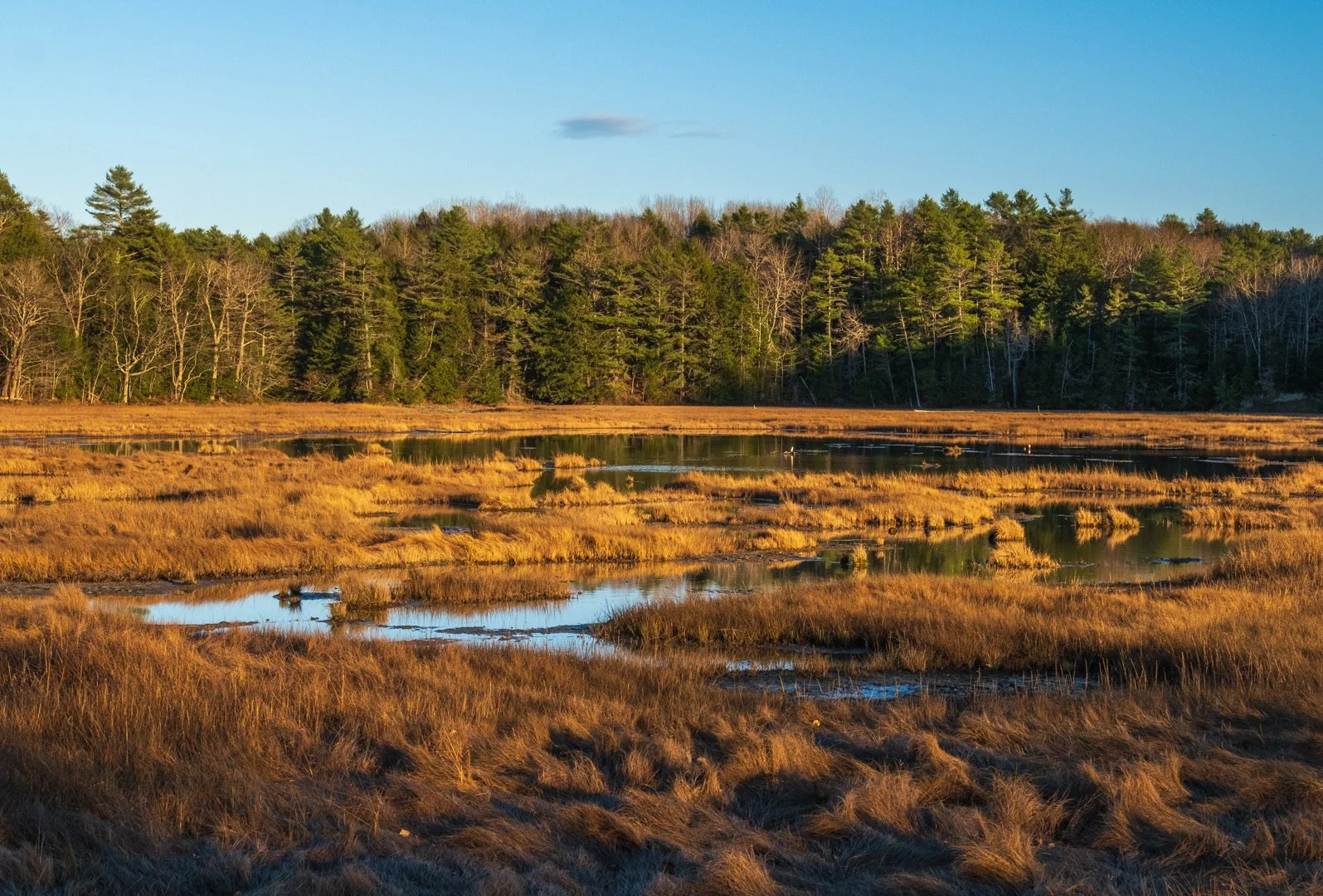
Cousins River Marsh Restoration
A Project with the Cousins River Marsh Collaborative
About the Cousins River Marsh
The Cousins River Marsh in Yarmouth and Freeport is one of Maine’s rich tidal marsh ecosystems—dynamic landscapes shaped by daily tides and home to fish, birds, and countless other species. These marshes:
Absorb storm surge and coastal flooding
Filter pollutants before they reach Casco Bay
Store carbon at rates far higher than forests
Provide habitat for species like juvenile shellfish and the saltmarsh sparrow, a bird of conservation concern along the East Coast
Why This Marsh Matters
Cousins River Marsh plays a vital role in the health and resilience of the surrounding communities and the larger Casco Bay watershed.
The marsh:
Supports water quality by filtering runoff from upstream areas, including a significant underground aquifer
Enhances coastal resiliency by reducing storm surge and mitigating flooding
Provides nursery habitat for fish, shellfish, marsh birds, and shorebirds
Offers recreational opportunities, public access, and supports a working waterfront
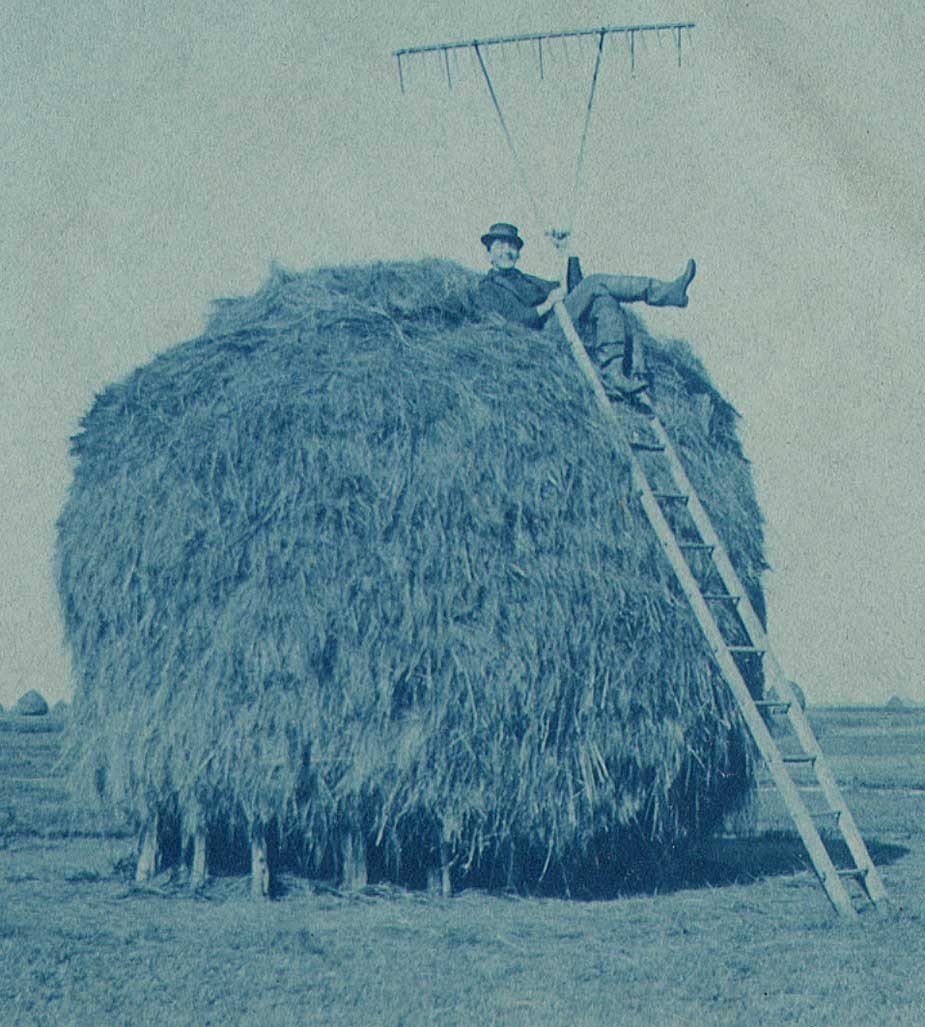
Image of man sitting on top of a salt marsh haystack from Historic Ipswich
A Marsh Shaped by History
Historical farming practices along the marsh created ditches and berms that disrupted the natural flow of water in the marsh. The results of salt hay farming has led to water pooling for long periods, killing vegetation, lowering marsh elevation, and degrading wildlife habitat. Our collaborative efforts aim to reconnect standing water to existing creeks and ditches, restoring the natural water flow. This work will promote healthy native vegetation and provide habitats for a variety of saltmarsh wildlife.
Restoring natural water movement is essential for helping the marsh adapt to rising seas and continue providing ecological and climate‑resilience benefits.
Why Restoration Is Needed
Today, the legacy of salt hay farming still affects the marsh. Water pools for long periods, vegetation dies back, and wildlife habitat declines.
Our restoration work focuses on reconnecting standing water to existing creeks and ditches, allowing tides to move naturally through the marsh again. This approach:
Promotes healthy native vegetation
Improves habitat for saltmarsh wildlife
Helps the marsh build elevation and resilience
Supports long‑term ecological function
The Cousins River Marsh Collaborative
Formed in 2023, the Cousins River Marsh Collaborative brings together land trusts, local towns, state and federal partners, and community members dedicated to conserving the Cousins River watershed. The Cousins River Marsh Collaborative is made up of Maine Coast Heritage Trust, Royal River Conservation Trust, Freeport Conservation Trust, U.S. Fish and Wildlife Service Gulf of Maine Coastal Program, Northeast Climate Adaptation Science Center, and the Casco Bay Estuary Partnership.
Together, we work to:
Protect land
Restore tidal marshes
Enhance wildlife habitat
Support climate resilience
Strengthen conservation efforts across the Casco Bay region
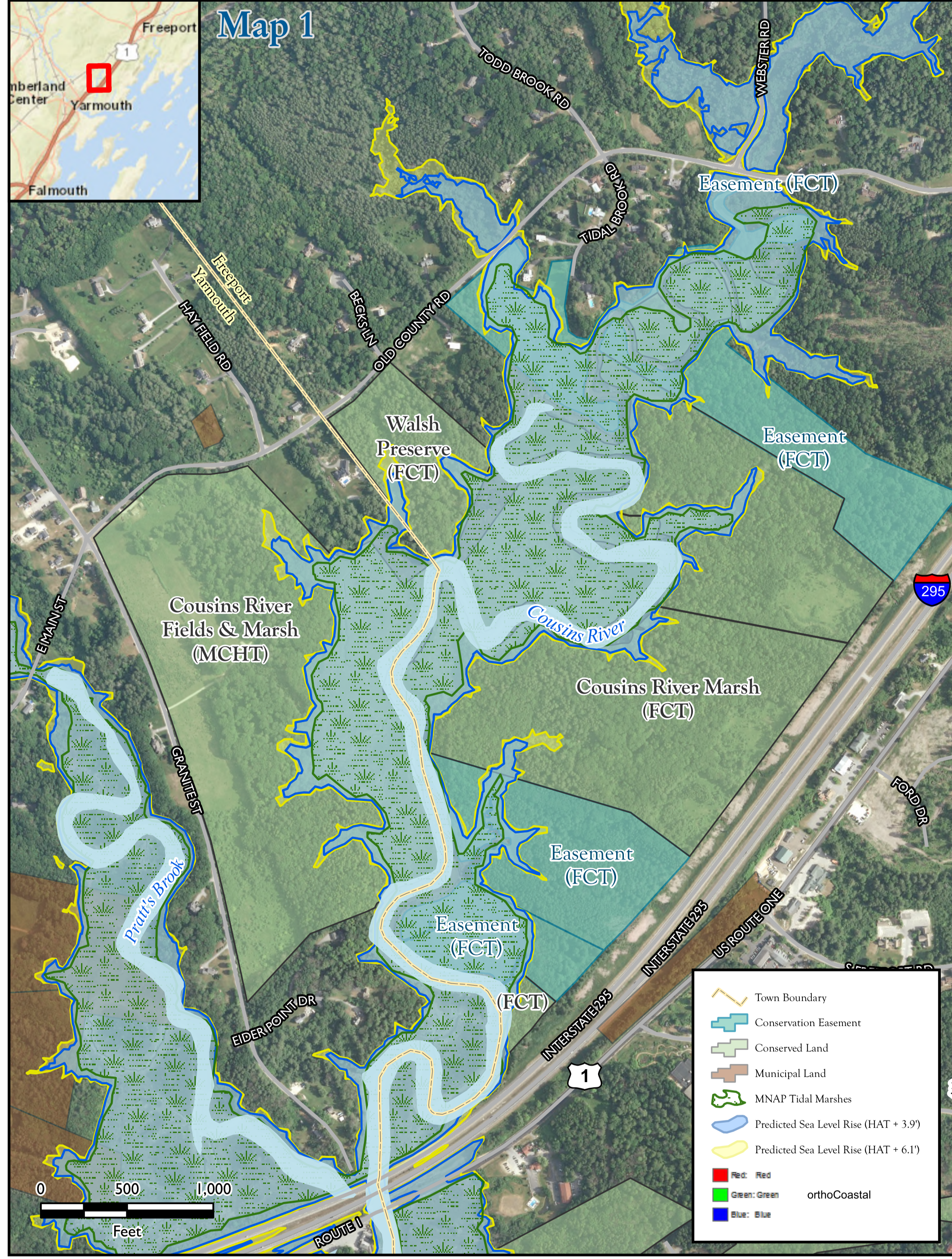
Cousins River Marsh Media
Click the video above to view a timelapse of the changes on the marsh from 2006-2026. Water pooling is especially visible along the marsh.
Learn about the marsh
University of Massachusetts research on the Cousins River Marsh system with Dr. Jon Woodruff



